Burnt Smell Electrical: What It Means and What to Do
Nothing in a house should smell like hot plastic. If yours does, right now, near a switch, a point or the board itself, treat it as the most urgent thing on your list today.
Locate the source if you safely can, isolate that circuit, and get (02) 9054 3079 on the phone before reading any further.
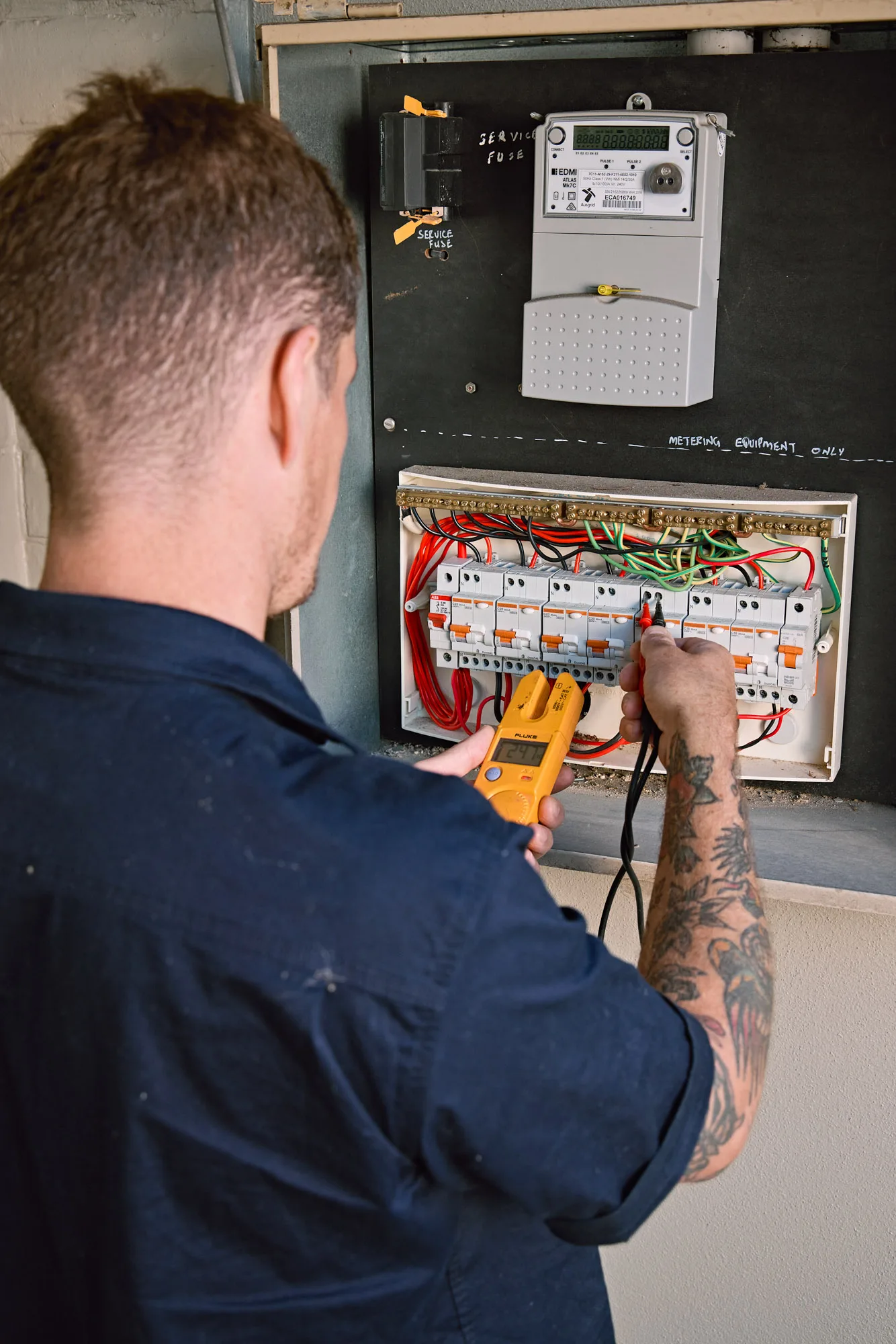
Why You're Smelling Burning
Plastic, cable sheathing and insulation only give off that sharp, acrid smell under heat well beyond normal operating temperature. Something is drawing more current than it was built to carry.
Most electrical symptoms have a genuinely harmless version. This one mostly doesn't.
A hot-plastic smell is your nose catching a fault stage most tools can't see yet.
The tricky part is location. Heat generated inside a wall cavity can travel a surprising distance before the smell reaches open air, so the strongest sniff isn't always the closest to the actual fault.
A smell that fades after a minute hasn't necessarily resolved anything. It may simply mean the load causing it stopped, and it will likely return the next time that circuit works hard.
Treat a smell that comes and goes as unfinished business, not a false alarm. The fault causing it doesn't go away just because you can't smell it anymore.
Describe the pattern when you call, whether it was constant, brief, or tied to a specific appliance switching on. That detail speeds up the diagnosis considerably.
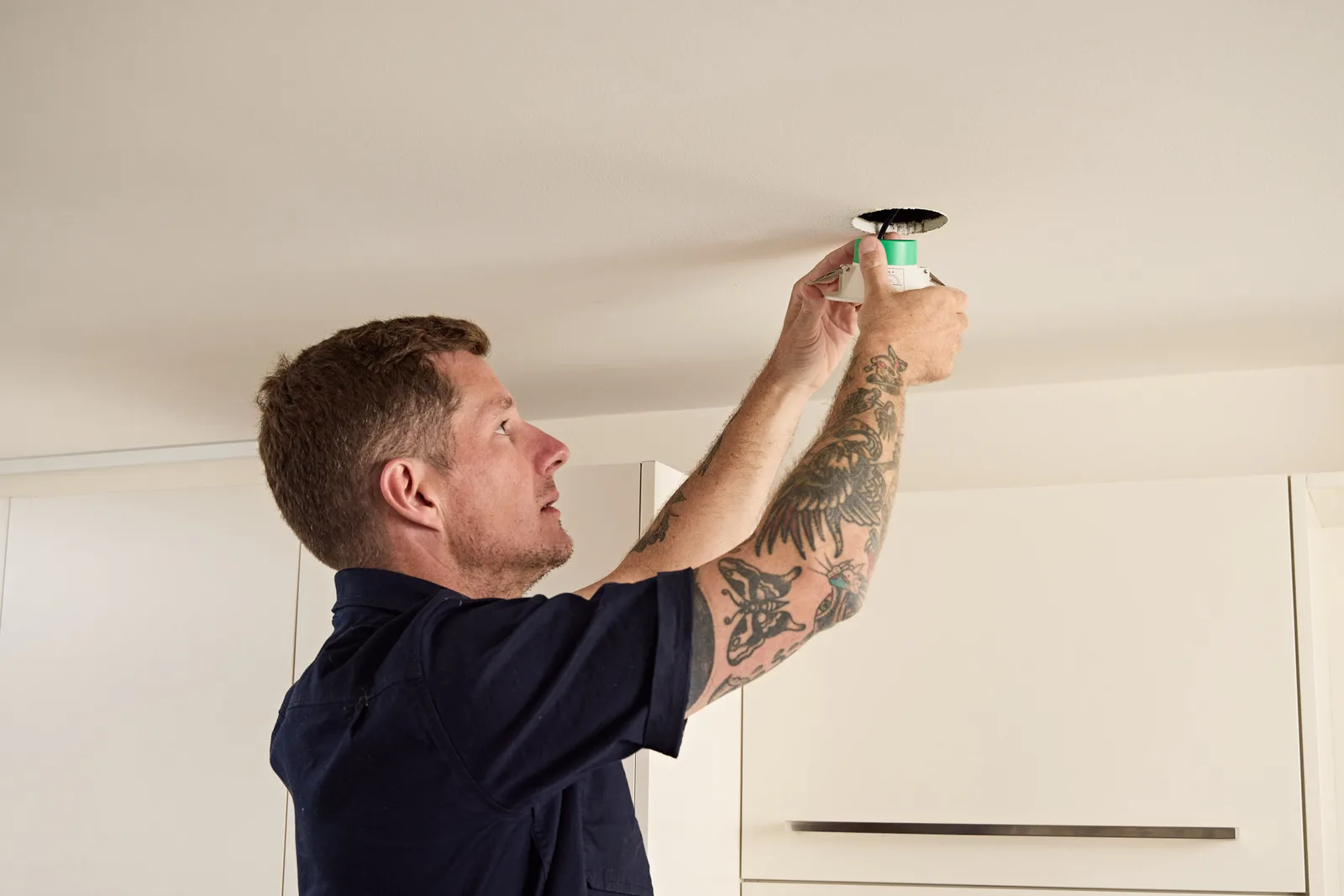
Is a Burnt Smell Dangerous?
Short answer: yes, close to every time. This is the one symptom on this site with barely a low-risk category attached to it.
Contrast that with a flicker or a single trip, symptoms that genuinely can sit for a day or two without harm. Heat and smell together don't get that same benefit of the doubt.
Strong, constant and paired with visible warmth or discolouration means clear the area and ring us immediately.
Faint and occasional still means today, not next week, because occasional heating tends to become constant heating without warning.
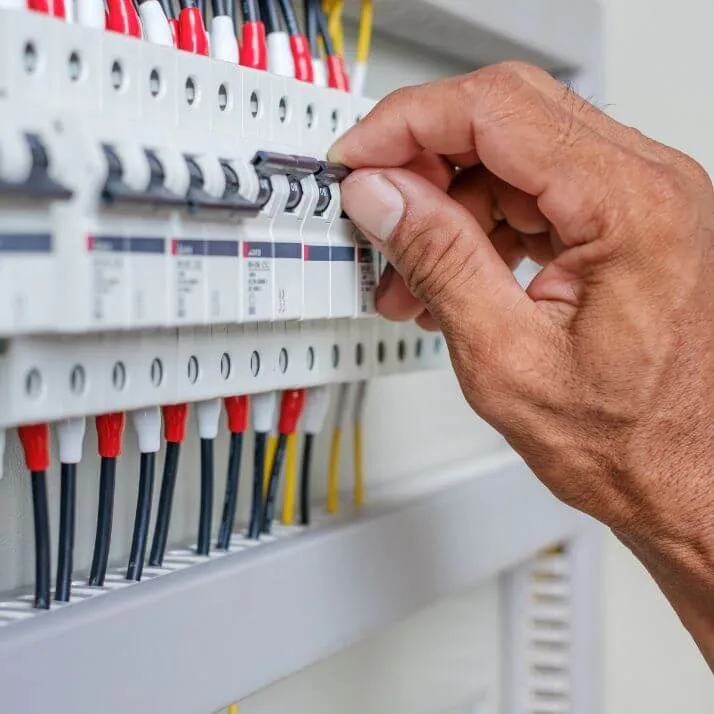
What Usually Causes It
Listed by how often our testing pins each one down:
- A loose or failing connection, at the switchboard, a power point or a light fitting, arcing slightly and heating the plastic around it.
- A circuit or point carrying too much load, current exceeding what the wiring or fitting is built for.
- A failing appliance, its own internal fault showing up as heat at the plug or point.
- Ageing insulation breaking down, on older wiring that no longer contains heat as it should.
- Cable damaged by pests, uncommon, but a genuine cause in roof and wall cavities.
- A worn switch or fitting, internal parts degrading enough to generate their own heat.
None of these announce themselves any other way before the smell arrives. That's what makes the smell worth acting on immediately rather than watching for a second sign.
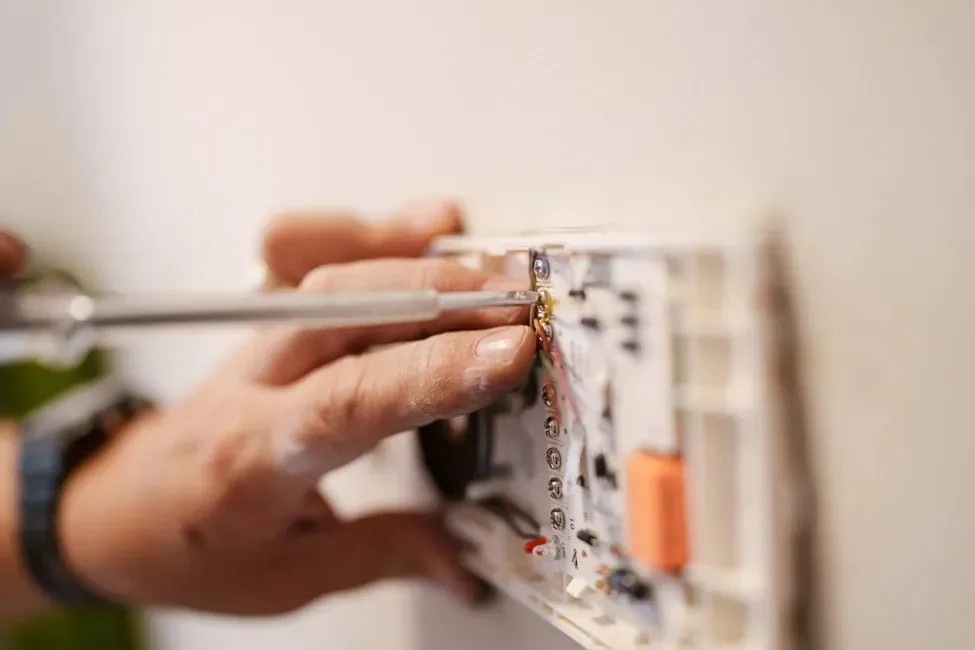
What To Do Right Now
- Isolate that circuit at the board, or the main switch if you can't tell which one.
- Clear the area of anyone nearby, especially kids or pets, and move anything flammable well away.
- Leave switches and fittings alone. Don't open covers to investigate.
- Ring (02) 9054 3079 now. Say what you're smelling, roughly where, and how strong it is.
How We Fix a Burnt Smell
A reported burning smell jumps our queue ahead of routine bookings, because it's one of the few calls where minutes genuinely matter.
On arrival we run a thermal camera over the affected area first, pinpointing the actual heat source rather than opening fittings on a guess.
The fix depends on what's found: a remade connection, a replaced fitting, or an isolated circuit while a failing appliance gets sorted separately. Anything already heat-damaged is swapped out rather than reused.
You'll get the repair explained in plain terms, tested under load, and certified where the work is notifiable.
We'll also give the surrounding circuits a look while we're on site. Heat damage rarely stays confined to a single point on an older board.
Why Berowra's Housing Makes This Common
Homes in the older pockets near Club Berowra and St Mark's were largely built through the same 1960s to 1980s expansion that shaped most of the suburb, with original wiring in a good number still doing the work.
That's not unusual for a bush-fringe suburb where blocks are large and renovations often focus on the visible parts of a house rather than what's inside the walls.
Insulation on cabling from that era ages differently to modern cable, and a connection under strain is more likely to show up as heat and smell before it shows up any other way.
We treat any burning-smell call from these older streets with extra caution, simply because the cable behind the wall is more likely to be original than replaced.
How to Stop It Happening Again
Once a burning-smell fault is properly repaired, prevention is mostly about not letting the next one develop unnoticed:
- Have the board looked over as part of switchboard upgrades when it's original to an older build.
- Fit safety switches so a developing fault cuts its circuit before the heat climbs any higher.
- Retire tired fittings via power points instead of loading a worn one over and over.
- Reach out for electrical repairs at the very first faint whiff, long before it turns obvious.
None of this guarantees a fault can never happen, but it closes off the specific conditions, loose connections and worn insulation, that let one build unnoticed for years.
A board that's been quietly upgraded piece by piece is far less likely to produce this particular symptom than one still running its original components.
Related Faults and Surrounding Areas
A power point running warm or discoloured without an active smell fits a scorched power point better. If the board makes noise but nothing smells yet, see our noisy switchboard guide.
We handle the same diagnostics for Asquith and Mount Colah households too.

Call Now About Your Burnt Smell
Any scorched or melting-plastic odour near anything electrical needs a call right now, not a booking for later in the week. Ring (02) 9054 3079 and describe what you're noticing and where.
We treat these calls as genuinely urgent, every time.
Common questions
Common Burnt Smell Electrical FAQs
The burning-smell questions we field most across Berowra, answered plainly.
How do you actually find where a burning smell is coming from?
We start at the switchboard and work outward, checking connections under thermal imaging while testing each circuit. A burning smell can travel through wall cavities, so tracing it to the true source beats guessing by the strongest sniff.
Can a burning electrical smell actually cause a fire?
Yes. That smell is usually insulation or plastic heating from a fault, and left alone it can progress to arcing or ignition. It's one of the few electrical symptoms that genuinely warrants urgent action.
Is a burning smell near a power point always an emergency?
Effectively yes. Unlike a flicker or a trip, a burning smell means something is actively overheating right now, so it should always be treated as urgent rather than something to monitor.
Can I keep using the circuit while I wait for someone to arrive?
No. Switch off the circuit at the board and unplug anything nearby. Continuing to use a circuit that smells hot risks the fault getting worse before help arrives.
How fast can you get to a burning smell call in Berowra?
Genuine burning-smell calls are treated as urgent, and we prioritise them over routine bookings. Tell us exactly what you're smelling when you call so we can size up the job before we arrive.
What does it cost to fix the cause of a burning smell?
It depends entirely on the source, a single fitting is far cheaper than a board fault. We test first and give a fixed written price for the actual repair before any work starts.